
Rebecca Seung-Bickley
Director of Communications & Public Education
she/her/hers
This weekend marks the beginning of a statewide voting rights restoration campaign that the ACLU of Alabama and Legal Services Alabama are partnering on. Historically, anyone who commits a crime of moral turpitude loses their right to vote in Alabama; however, it has never been clear what specifically was a crime of moral turpitude, which has resulted in inconsistency and confusion across the state.
Now, there is a new law called the Definition of Moral Turpitude Act which changes all of that. This law created a specific list of crimes of moral turpitude so that everyone has the same understanding of who may or may not lose their right to vote. If a person's crime is not on the list, then the person does not lose the right to vote and, once registered, can exercise the right to vote as much or as little as desired. If a person's crime is considered a crime of moral turpitude, it means that they must apply to restore their voting rights through the Board of Pardons & Paroles. The process is the same as before the new law; the only difference is who needs to use the restoration process.
In fact, thanks to this law, there are many Alabamians who were previously disfranchised but will now automatically regain their right to register to vote because their crime is no longer considered a crime of moral turpitude. This is a good thing. When we talk about the importance of protecting our democratic rights, what's more basic than the right to vote in a democracy? It's what sets our government apart from monarchies and dictatorships, where civil liberties like freedoms of speech and press and religion and privacy are often abused if not outright denied. Voting is one way our country maintains a check on those in power, so the more people who can vote, who can make their voices heard, the better.
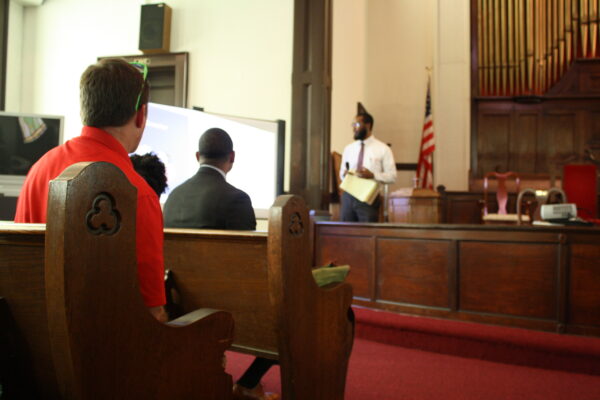
On Saturday, July 8, we are kicking off this campaign with a one-of-a-kind training that will bring together speakers from the Board of Pardons & Paroles, the Secretary of State, ACLU of Alabama, Legal Services Alabama, and The Ordinary People Society. All of these organizations play a different part in voting rights restoration, so this will be a unique opportunity to get all of them in the same room to explain the process from their perspectives and to ask them questions.
With this campaign, we hope to reach out and educate affected communities so that those who can vote or who can get their vote back know it. After all, both knowledge and voting are power.
Originally published on AL.com