2025-2026 Annual Report

Document Date: September 8, 2026

A Letter From the Executive Director, JaTaune Bosby Gilchrist

This has been a year of reckoning. With the rolling back of voting rights across our state and nation, and the fight for due process and the birthright of citizens, people are weary. Yet these times, although unprecedented, are not unfamiliar. Our organization was founded at the height of the Civil Rights Movement, but the ACLU’s investment in Alabama began in the 1930s during the Scottsboro Boys trials. What we have learned over the past six decades is that these times fortify us. We have weathered this storm before, and through our collective determination, we will emerge from this fight stronger than ever, and with a shared vision of the true promise of this nation.

Despite the challenges of this moment, our affiliate has not slowed down. We deepened our voting rights work through Project M.O.V.E., expanding our presence in Black barbershops, churches, and HBCU campuses across the state to build the kind of trust that voter education requires. When the Governor called a special session in the wake of Callais, our legal and legislative teams responded immediately, coordinating with partners to hold a protest and monitor committee hearings, and mobilizing thousands of Alabamians at the “All Roads Lead to the South” rally in Montgomery. Our fight for fair maps continues in Allen v. Milligan and Stone v. Allen, and we remain committed to that fight as we were the day we filed.

This year also brought real progress beyond the courtroom. We held our “Moms Matter” listening sessions across Alabama to hear directly from Black women about their pregnancy and birth experiences; and published a Maternal Health Report based on those findings. We traveled across the state through our “Atoning Alabama” workshop series to educate families and advocates about the opaque pardons and parole system; and released an updated Parole Watch Report. And in March, we stood up for democracy by partnering on No Kings Day 3, with staff speaking at events in Birmingham, Huntsville, Montgomery, and Mobile.

We know that the road ahead will not be easy. The legal and political tools that protected Black Alabamians' voting power for decades are under direct assault, and our opponents have made clear that they will not stop pursuing maps and policies that dilute the power of Black voters. But we have never measured this work in single court rulings or legislative sessions. We measure it in decades: in the trust we build year after year, in the leaders we develop, and in the communities who know that when we show up, we do so with integrity and for the long haul.
Thank you for staying with us in this fight. Sixty-one years in, your support is what makes this work possible, and we are deeply grateful for your continued partnership on the long road toward a more just and equitable Alabama.

In Community,

JaTaune Bosby Gilchrist

All Documents


Related Publications


Related Content


Court Case
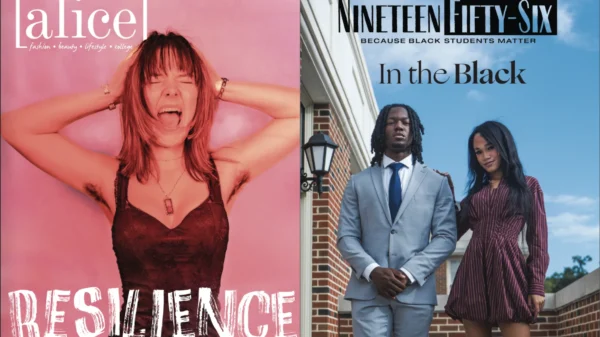
covers of Alice and 1956
  • First Amendment Rights

Pointer, et al. v. Phelps, et al.

A group of students at the University of Alabama filed a federal lawsuit challenging the university’s suspension of two student publications, Nineteen Fifty-Six and Alice. The students argue that the University of Alabama’s decision to suspend the magazines unlawfully censors disfavored student voices and perspectives, violating their rights under the First Amendment to the U.S. Constitution. In December 2025, the University of Alabama permanently suspended and stripped funding from the two student-run campus magazines based on their editorial perspectives and focus on topics related to race and gender, citing a non-binding memorandum released by the U.S. Attorney General Pam Bondi that provides inaccurate information about “unlawful discrimination” under federal law for recipients of federal funding. The students allege that the University of Alabama’s suspension of Alice and Nineteen Fifty-Six constitutes unlawful censorship of the students’ viewpoints in violation of their rights under the First Amendment and are asking the court to reverse the suspensions and restore the magazines’ funding and operations. The plaintiffs in the case include University of Alabama students who contributed to both publications before the suspension and funding termination by the university. The students are represented by the Legal Defense Fund (LDF), ACLU of Alabama, and Southern Poverty Law Center (SPLC). "I believe that freedom of expression on campus should neither be censored nor restricted because of its perceived value or audience,” said Rihanna Pointer, a student plaintiff in the case. “Nineteen Fifty-Six and Alice have always provided a platform for diverse voices and perspectives that are vital for fostering an inclusive community amongst students on campus, and I have always advocated for diversity of thought and representation through my writing. That’s why I believe that the University’s suspension of the magazines must be reversed." "The ability to create and contribute to spaces that amplify the voices of college students who hold identities that are typically not reflected in campus media is not only important but necessary work,” said Gabrielle Gunter, a student plaintiff in the case. “Marginalized students deserve the opportunity to participate in magazines and have access to the same resources and support that other publications have to create opportunities for engagement, discussion, and exploration on a wide array of issues. Discrimination based on the views of students who seek to create inclusive media for all students has no place in our society, so it's really important to me to keep fighting for what is right." For several years, Nineteen Fifty-Six and Alice served as campus publications where students could explore identity, culture, creativity, and campus life through writing, art, photography, and storytelling. In the complaint filed today, students allege that the suspensions violate the First Amendment by imposing viewpoint-based restrictions on students’ speech. The complaint further states that the non-binding memorandum cited by the University of Alabama neither discusses nor requires the university to suspend student publications merely because of editorial perspectives on race and gender, and that the non-binding memorandum cannot override students’ constitutional rights. “The University of Alabama’s decision to suspend these publications is discriminatory and unconstitutional,” said Avatara Smith-Carrington, Assistant Counsel at LDF. “Student magazines like Nineteen Fifty-Six and Alice provide students with a critical space to explore culture, build community, bridge divides, and reflect on their lived and shared experiences. The First Amendment protects the rights of students’ to write, publish, and engage in dialogue about the issues that shape their lives, free from viewpoint discrimination. Silencing these students sends a troubling message that certain student voices and experiences don’t belong on campus.” “Students at the University of Alabama deserve the right to freely express themselves, including their viewpoints shaped by their experiences as women and Black people,” said Sam Boyd, senior supervising attorney, Southern Poverty Law Center. “Their lived experiences are valid, important to the fabric of this country’s history and should be shared without interference. The suspension of Alice and Nineteen Fifty-Six not only disenfranchises marginalized communities, but it signals a return to the darkest times in our nation’s history.” “The suspension of the magazines, Alice and Nineteen Fifty-Six, is the University of Alabama’s latest attack on students’ First Amendment rights of free speech and free association,” said Alison Mollman, ACLU of Alabama Legal Director. “In bringing this litigation, we are proud to stand alongside student editors and contributors. We urge the court to enforce First Amendment protections for students at the University of Alabama by reversing the suspensions and restoring our clients’ rights to publish their magazines.”
Resource
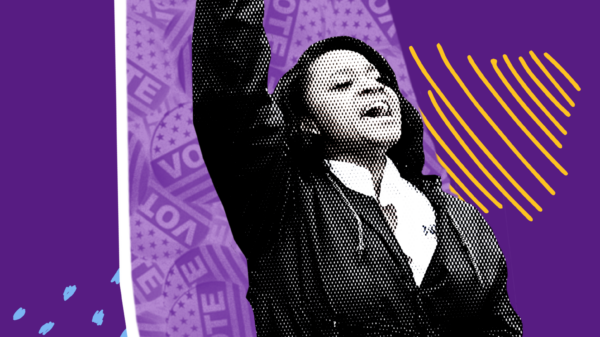
woman with raised fist in black and white over a cut out of the state of alabama
  • Voting Rights

Project MOVE

Voting Rights of Alabamians are under attack, pushing more and more people out of the political process. It's time we do our part to defend them.