Read more from the ACLU Archives: The Enduring History of the Civil Rights Movement.
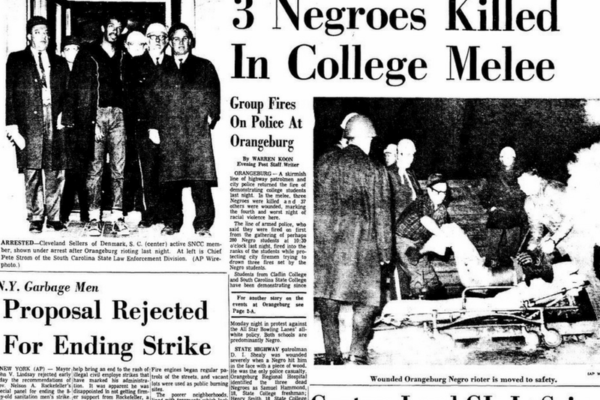
50 years ago today, in Orangeburg, South Carolina, nine White highway patrolmen opened fire on a group of unarmed Black college students who were peacefully assembled to protest a bowling alley's refusal to allow them service. This use of excessive force killed three students and wounded 27 others.
Prior to this event, South Carolina was celebrated for its nonviolence during the unrest of the civil rights years. In an effort to protect its "progressive" self-image, the young governor, Robert McNair, and his administration distorted the facts about what happened in Orangeburg.
They claimed the deaths resulted from a two-way gun battle between students and police officers at the college, blaming the riot on Cleveland Sellers, a young Black activist who had organized local college students. The lie would later unravel due to scrutiny over facts in court and primary eyewitness accounts of the event; however, this did not stop McNair from using local media to distort the truth, which caused the community of Orangeburg to ignore their own issues of racial discrimination and unresolved history.
During Black History Month, we must remember the many Black voices who have spoken out against racism, and we must confront those who attempt to silence those voices, whether through violence, intimidation, or falsehoods. The current Black Lives Matter and Take A Knee movements show that we still have a lot of work to do to challenge these injustices today.