News & Commentary
The Supreme Court Ignores the Reality of President Trump’s Discriminatory Muslim Ban
The Supreme Court today rejected the challenge to President Trump’s Muslim Ban. In its 5-to-4 decision, the court failed to make good on principles at the heart of our constitutional system — including the absolute prohibition on official disfavor of a particular religion.

The Supreme Court’s Groundbreaking Privacy Victory for the Digital Age
The Supreme Court on Friday handed down what is arguably the most consequential privacy decision of the digital age, ruling that police need a warrant before they can seize people’s sensitive location information stored by cellphone companies.
Fact-Checking Family Separation
With nearly 2,000 immigrant children separated from their parents in just six weeks alone, there is an unprecedented human rights disaster unfolding at our border.

This Is How Net Neutrality Will End
On June 11, net neutrality protections will cease to exist. This means your internet service provider will be able to engage in content based discrimination. Internet content it likes — for political or financial reasons — will be delivered at top speeds, while content it disfavors will be slowed or even blocked.

In Masterpiece, the Bakery Wins the Battle but Loses the War
In the Masterpiece Cakeshop case, the Supreme Court on Monday ruled for a bakery that had refused to sell a wedding cake to a same-sex couple. It did so on grounds that are specific to this particular case and will have little to no applicability to future cases.
Why Fighting Anti-Abortion Laws in Alabama May Lead to D.C.
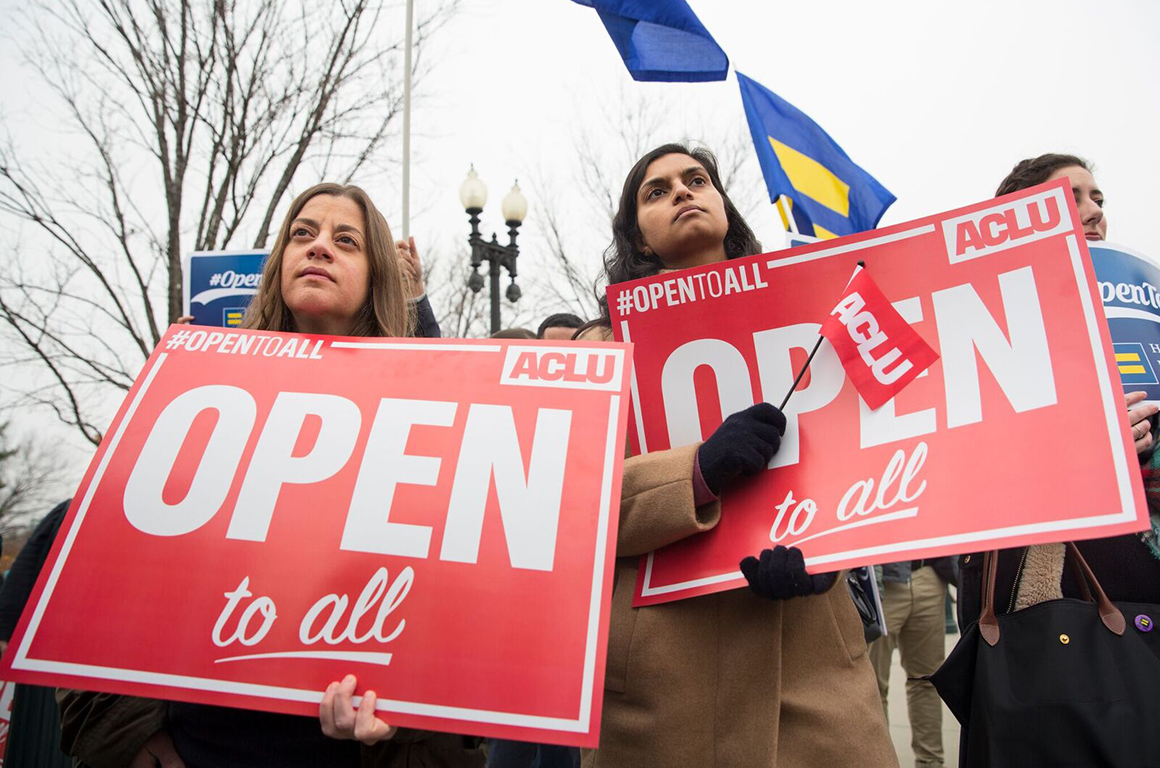
Sometimes in order to fight for what’s best for Alabama, you have to start in D.C. That’s why this Thursday, May 10, the ACLU of Alabama is participating in a lobby day hosted by the Center for Reproductive Rights for the Women’s Health Protection Act (WHPA).
By Portia Allen-Kyle
Chikesia Clemons Could Have Been Me
On the heels of the arrest of two Black men in a Philadelphia Starbucks comes the unsettling story of Chikesia Clemons. According to Clemons, her request for plastic utensils turned into a disagreement between her and the server, and the server called the police.
By Portia Allen-Kyle

Making Space for Trans People in the #MeToo Movement
Campaigns like #MeToo and #TimesUp have brought sexual harassment to the forefront of the national conscience like never before. But the conversation hasn’t been as inclusive as it should be. The movement must do more to reflect the voices and needs of the transgender community, a demographic that consistently gets overlooked despite facing sexual violence at staggering rates.
By Gabriel Arkles


Stay Informed
Sign up to be the first to hear about how to take action.
By completing this form, I agree to receive occasional emails per the terms of the ACLU’s privacy statement.
By completing this form, I agree to receive occasional emails per the terms of the ACLU’s privacy statement.