Court Cases
Featured Cases
Mar 24, 2026
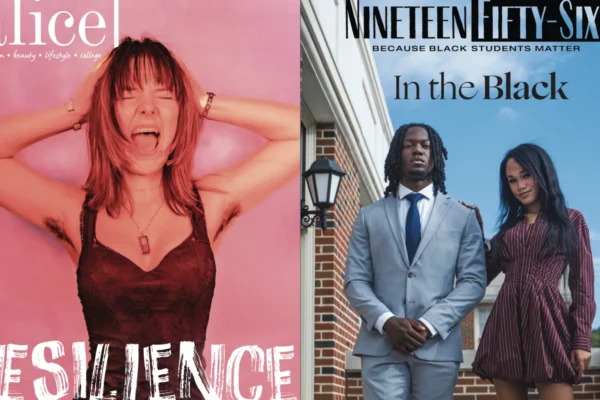
Pointer, et al. v. Phelps, et al.
A group of students at the University of Alabama filed a federal lawsuit challenging the university’s suspension of two student publications, Nineteen Fifty-Six and Alice. The students argue that the University of Alabama’s decision to suspend the magazines unlawfully censors disfavored student voices and perspectives, violating their rights under the First Amendment to the U.S. Constitution.
In December 2025, the University of Alabama permanently suspended and stripped funding from the two student-run campus magazines based on their editorial perspectives and focus on topics related to race and gender, citing a non-binding memorandum released by the U.S. Attorney General Pam Bondi that provides inaccurate information about “unlawful discrimination” under federal law for recipients of federal funding. The students allege that the University of Alabama’s suspension of Alice and Nineteen Fifty-Six constitutes unlawful censorship of the students’ viewpoints in violation of their rights under the First Amendment and are asking the court to reverse the suspensions and restore the magazines’ funding and operations. The plaintiffs in the case include University of Alabama students who contributed to both publications before the suspension and funding termination by the university. The students are represented by the Legal Defense Fund (LDF), ACLU of Alabama, and Southern Poverty Law Center (SPLC).
"I believe that freedom of expression on campus should neither be censored nor restricted because of its perceived value or audience,” said Rihanna Pointer, a student plaintiff in the case. “Nineteen Fifty-Six and Alice have always provided a platform for diverse voices and perspectives that are vital for fostering an inclusive community amongst students on campus, and I have always advocated for diversity of thought and representation through my writing. That’s why I believe that the University’s suspension of the magazines must be reversed."
"The ability to create and contribute to spaces that amplify the voices of college students who hold identities that are typically not reflected in campus media is not only important but necessary work,” said Gabrielle Gunter, a student plaintiff in the case. “Marginalized students deserve the opportunity to participate in magazines and have access to the same resources and support that other publications have to create opportunities for engagement, discussion, and exploration on a wide array of issues. Discrimination based on the views of students who seek to create inclusive media for all students has no place in our society, so it's really important to me to keep fighting for what is right."
For several years, Nineteen Fifty-Six and Alice served as campus publications where students could explore identity, culture, creativity, and campus life through writing, art, photography, and storytelling. In the complaint filed today, students allege that the suspensions violate the First Amendment by imposing viewpoint-based restrictions on students’ speech. The complaint further states that the non-binding memorandum cited by the University of Alabama neither discusses nor requires the university to suspend student publications merely because of editorial perspectives on race and gender, and that the non-binding memorandum cannot override students’ constitutional rights.
“The University of Alabama’s decision to suspend these publications is discriminatory and unconstitutional,” said Avatara Smith-Carrington, Assistant Counsel at LDF. “Student magazines like Nineteen Fifty-Six and Alice provide students with a critical space to explore culture, build community, bridge divides, and reflect on their lived and shared experiences. The First Amendment protects the rights of students’ to write, publish, and engage in dialogue about the issues that shape their lives, free from viewpoint discrimination. Silencing these students sends a troubling message that certain student voices and experiences don’t belong on campus.”
“Students at the University of Alabama deserve the right to freely express themselves, including their viewpoints shaped by their experiences as women and Black people,” said Sam Boyd, senior supervising attorney, Southern Poverty Law Center. “Their lived experiences are valid, important to the fabric of this country’s history and should be shared without interference. The suspension of Alice and Nineteen Fifty-Six not only disenfranchises marginalized communities, but it signals a return to the darkest times in our nation’s history.”
“The suspension of the magazines, Alice and Nineteen Fifty-Six, is the University of Alabama’s latest attack on students’ First Amendment rights of free speech and free association,” said Alison Mollman, ACLU of Alabama Legal Director. “In bringing this litigation, we are proud to stand alongside student editors and contributors. We urge the court to enforce First Amendment protections for students at the University of Alabama by reversing the suspensions and restoring our clients’ rights to publish their magazines.”
Jan 14, 2025
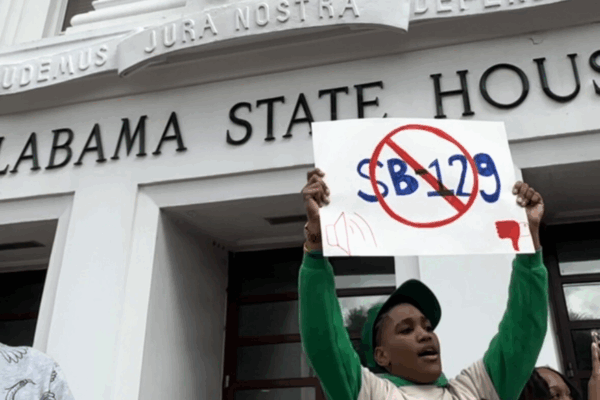
Simon et al. v. Kay Ivey et al.
A group of Alabama students and educators in higher education filed a federal lawsuit challenging Senate Bill 129 (SB129) – a censorship bill that impedes their ability to learn, teach, and engage in public university classes and programs related to diverse viewpoints and topics.
Sep 25, 2023
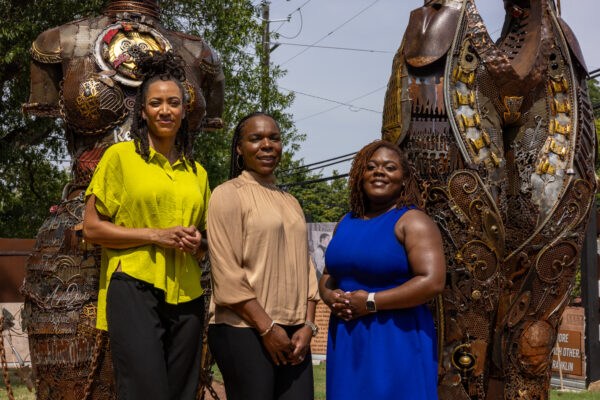
Oasis Family Birthing Center et. al. v. Alabama Department of Public Health
We filed a lawsuit in Alabama challenging ongoing actions by the Alabama Department of Public Health (ADPH), which have imposed a de facto ban on freestanding birth centers throughout Alabama, preventing three such birth centers from providing much-needed pregnancy care to their patients.
All Cases
39 Court Cases
Mar 09, 2018

Hester v. Gentry
In Alabama’s criminal justice system, wealth can be synonymous with freedom, and lack of wealth can mean incarceration. That’s wealth-based justice, and it’s unconstitutional.
Feb 06, 2018
Corbitt, et al. v. Taylor, et al.
This lawsuit challenges Alabama’s policy prohibiting gender marker changes on drivers’ licenses for trans people who have not had genital surgery.
Sep 30, 2016
Hunter, et al. v. Beshear
This class-action lawsuit is against Alabama Department of Mental Health Commissioner James V. Perdue on behalf of persons with severe mental illness who have been languishing in Alabama county jails awaiting court-ordered mental health services known as competency restoration treatment.
Aug 30, 2016
Allen v. English, et al.
We represented Yvonne Allen, a devout Christian woman who covers her hair with a headscarf as part of her religious practice and who was forced to remove her head covering to renew her driver's license.
Aug 18, 2016
Golden v. City of Wetumpka, et al.
We represented Keith Golden, a retired U. S. Army Staff Sergeant who was exercising his First Amendment right to film police officers in public.
Jul 06, 2016
West Alabama Women’s Center v. Williamson
Pre-existing law (before Planned Parenthood v. Strange) required that a physician either have admitting privileges or have a contract with a back-up physician. This has resulted in a substantial, and detrimental, effect on the ability of women to obtain an abortion in Alabama.
Stay Informed
Sign up to be the first to hear about how to take action.
By completing this form, I agree to receive occasional emails per the terms of the ACLU’s privacy statement.
By completing this form, I agree to receive occasional emails per the terms of the ACLU’s privacy statement.