Digital Organizer Toolkit

You are the most effective messenger to help MOVE your folks to the polls!

To help talk about voter turnout and the impacts of voting on all communities, we have created the Project MOVE Digital Organizer Toolkit. In this toolkit you will find shareable graphics, conversation guides, and ways you can help MOVE more Alabamians to the polls.
Social Media Toolkit

You can be a voting influencer.

Download our shareable graphics and post them to your profile. Share them with your own message or copy and paste our sample social media posts.

Share original ACLU of Alabama posts with your followers. Find us on social media here:

Download Our Voting Graphics
social media

Relational Organizing

YOU are the most powerful messenger.

What is Relational Organizing?
Relational organizing means using the power of your relationships to get the people you know to take action– in this case, to vote! We can take responsibility for making sure that our friends and family vote by calling, or texting, or DM'ing, them before an election. Research proves that this is an enormously effective tactic for boosting voter turnout.

Why Relational Organizing

  • Messengers Matter: You are the most powerful messenger for your community! This is about TRUST and social pressure. If you got a call from a campaign organizer asking you to vote, it would be easier for you to ignore it than if your best friend texted you and asked you about voting. You are more trusted by your peers than any campaign or ACLU staff member. To put simply, your influence matters more than a stranger’s.
  • More Conversations: Folks are less likely to pick up the phone for an unknown number— even one with your area code— than they are to pick up a call from their parents or a friend. Research shows, there is a 95% contact rate with friend-to-friend outreach as opposed to the general 20% contact rate from a campaign or organization. Think about it this way: if you are hosting a party, you would reach out to invite your friends, you wouldn't have a stranger who doesn't know them call them!
  • Higher Turnout: Relational organizing reaches more non-voters. Not all of your friends and family are voters so their info is harder to get for traditional phonebanking or canvassing. You might even register new voters! This also speaks to the power of the messenger– a random volunteer won’t have the same connection as you do with someone who may be disinterested in voting. Research proves that this is an enormously effective tactic. A conversation between people who know each other is 2.5x more effective at driving voter turnout than a conversation between strangers.

Need some help getting started? Check out our conversation guide on talking to your people about voting!

Read Our Talk to Your People Guide
turnout talking points

Digital Not Your Thing? Go Analog.

Resources for hands-on voter advocacy.

Stay tuned for on the ground volunteer opportunities like canvassing and tabling as well as resources for making your voice heard in print.

Volunteer with Project MOVE
go analog

Related Content

Resource
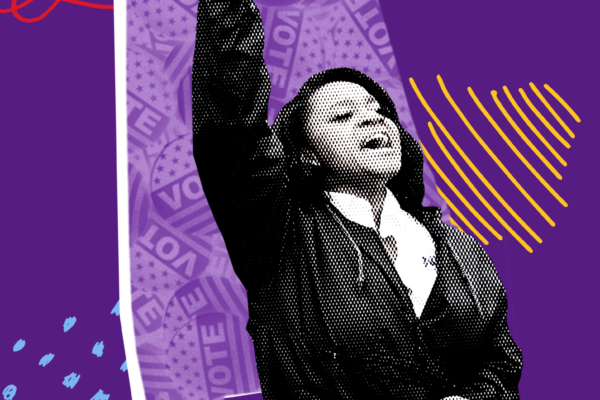
woman with raised fist in black and white over a cut out of the state of alabama
  • Voting Rights

Project MOVE

Voting Rights of Alabamians are under attack, pushing more and more people out of the political process. It's time we do our part to defend them.
Court Case
Jan 24, 2022
Placeholder image
  • Voting Rights

Milligan et al. v. Allen et al.

This case decided whether Alabama’s congressional districts as drawn in 2021 violate Section 2 of the Voting Rights Act because they discriminate against Black voters.
News & Commentary
Apr 04, 2024
Civil Rights, Voting Rights, Disability Rights Groups Sue Alabama Over SB 1’s Extreme Anti-Voter Restrictions and Penalties
  • Voting Rights

Civil Rights, Voting Rights, Disability Rights Groups Sue Alabama Over SB1’s Extreme Anti-Voter Restrictions and Penalties

The lawsuit filed today challenges SB 1 as violating the First and Fourteenth Amendments of the United States Constitution, Section 208 of the Voting Rights Act, and the Help America Vote Act of 2002.